What’s the “C-word,” you may ask?
Coding.
So many people tell me they’re terrified of it.
They don’t know where to start, or they wonder: What would I even do with this anyway?
And honestly? I get it.
The world of coding feels massive, but it is absolutely important that we know how to tackle the basics so we can build the confidence to dive into data.
You are a Data Point
As you read this sentence, you are a data point. The device you’re reading this on just logged where you accessed this article from.
Was it a link from LinkedIn? An email? Directly from my website?
I then use this information to decide where I should spend my time to boost engagement.
Every action leaves a trace. Not just this article.
Your phone, your computer, your car…everything is collecting data.

Because of this constant flood of information, you can’t scroll on LinkedIn without seeing someone mention R, Python, AI, vibe coding… or maybe that’s just my feed.
There’s so much noise out there that trying to learn it all can feel like drinking from a firehose.
So a lot of people sigh in defeat and say:
“Ugh, I can’t code.”
“You use R? That’s so hard!”
“I hate math!”
But let me let you in on a little secret that “big code” doesn’t want you to know.
Coding is just expressing life through symbols and letters.
What Language Is Best for Me?
Before we dive further into this section, I should clarify a few things.
A programming language is, quite simply, a language used for programming, such as R or Python. Think of it like English or Spanish. Each language has its own vocabulary and structure.
Syntax refers to the grammar rules of a language. It is the specific way code must be written for the computer to understand it.
And coding is simply the act of writing using that language and syntax.
Now that this is out of the way… we may proceed.
When thinking about coding, the first thing that you should consider is your desired outcome.
I’m an ecologist, so my ultimate goal is to understand and communicate various ecological phenomena.
In my day-to-day work, I use programming languages to analyze wildfire patterns, process satellite imagery, and understand how ecosystems change over time. I then translate the outputs into a way that others can understand.
Someone else might use coding to build apps, analyze finances, create art, build systems, build games, create transportation routes that shorten distances to grocery stores, and automate tasks.
The language changes, but the core idea stays the same:
Coding is just a tool that helps us understand information. Your interests determine what language you use and how you use it.
The Secret to Coding
Leaning into these tools has taken me places I never expected, including attending a joint NEON-TERENO research workshop in Germany focused on global ecological data collaboration.
But I didn’t get there by being some genius wizard who writes flawless code on the first try.
I got there because I knew the secret to coding:
It is trial and error. And it rewards practice.
You write a line.
It breaks.
You fix a typo.
It runs.
You celebrate.
And then you do it all over again.
The more you code, the better you get, just like practicing Spanish on Duolingo.
Where do I start?
You do not need an expensive degree to start coding. I wish I had realized that earlier (haha, jk… sort of). But maybe I walked so those after me could run.
There are countless free resources to learn coding, and just as much free data available to experiment with.
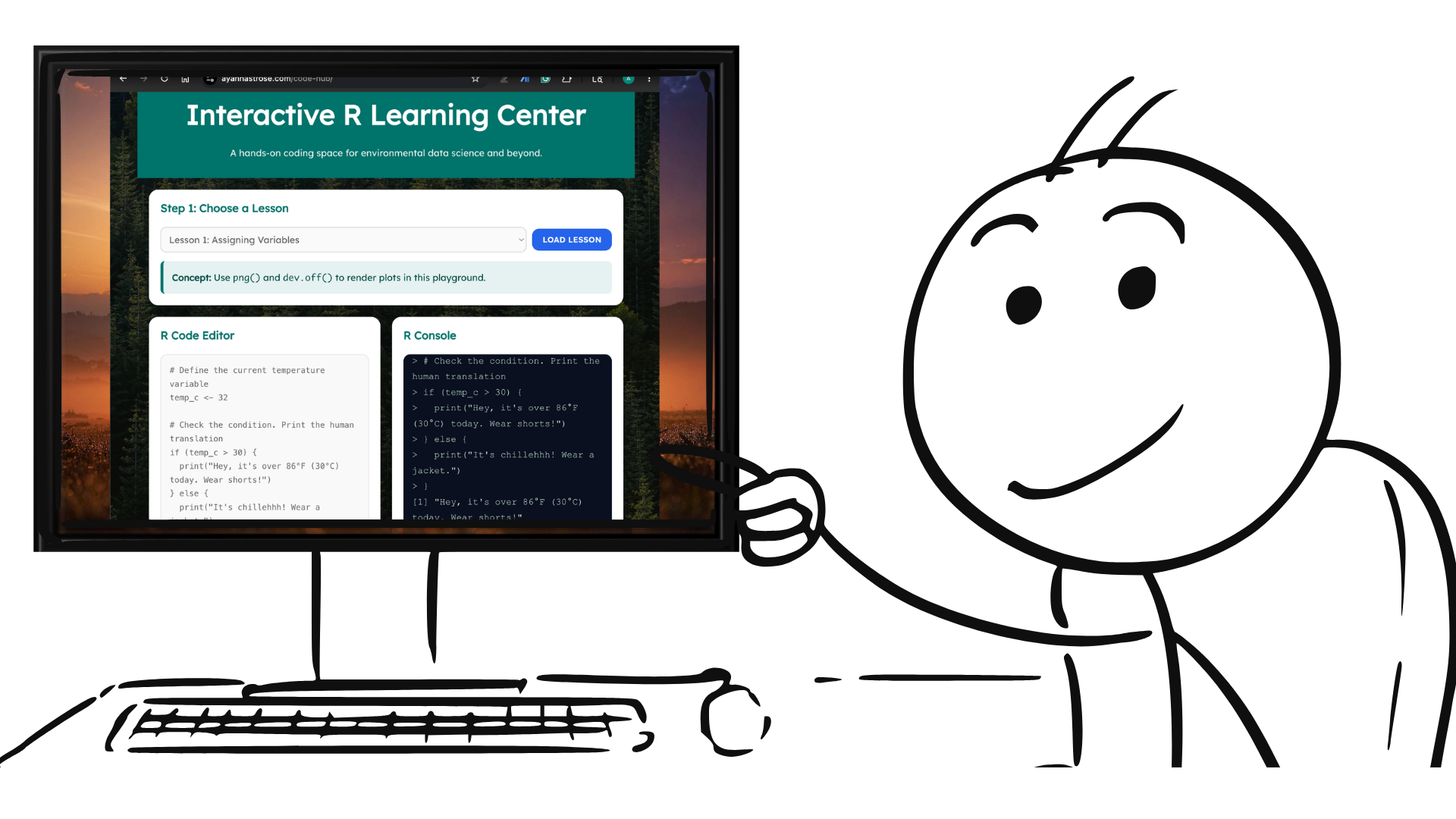
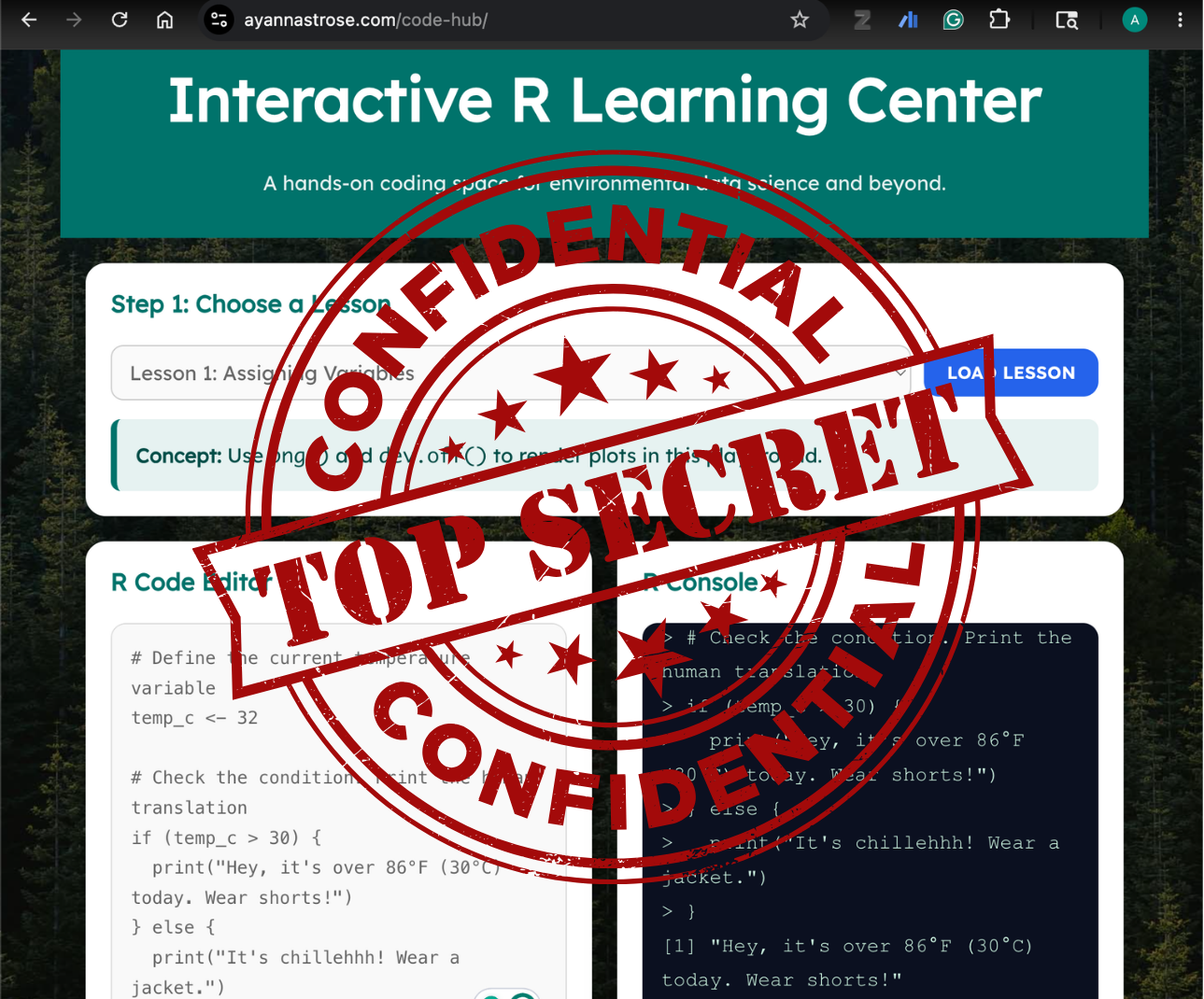
If you’re interested in starting your coding journey, I have developed a simple web app on my website to help get your feet wet. There are a few mini-lessons with built-in lines of code that I’ll continue expanding over time. I built it so that you don’t have to worry about installing the right software, loading libraries, or any other setup.
P.S. You can run it from any device.
I also keep a running list of free learning resources, so if you want them, comment “list,” and I’ll send some your way.
For people interested in environmental work, places like the National Ecological Observatory Network (NEON) offer a wealth of open-access lessons and datasets. Their tutorials walk you step by step through working with and visualizing data in both R and Python.
You learn a little coding and a lot of ecology at the same time.
That’s the beautiful part: you do not need to reinvent the wheel.
You just need the basics.
List