Seven years ago, I would have walked right past this tiny blue flower poached on this dusty green body of leaves.
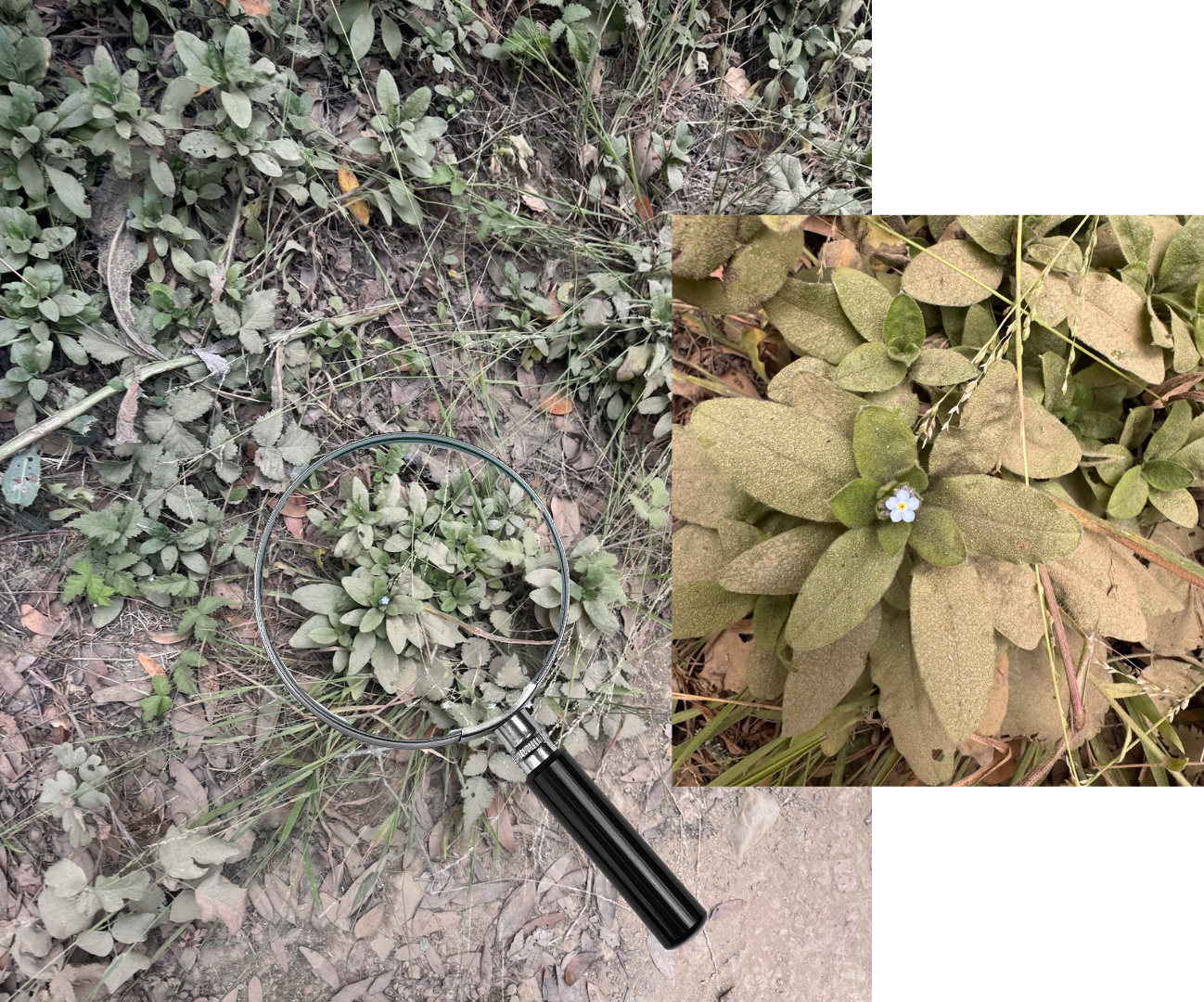
Walking through a forest, my eyes were always either straight ahead or looking through the canopy. After all, the towering trees captivated me the most. Their height, the size of the trunks, the size of their leaves. They seemed to really make the forest itself.
Most things below the trees were like background scenery. Pretty…but barely registering as I walked through the forest.
Today, I find myself looking down far more often than up…or equally as often. I have come to realize that the understory has a story.
It tells you where the forest has been, where it is now, and where it’s headed.
Every seedling is a glimpse into the future of the forest.
A fallen tree, something I once saw as an obstacle on the trail, has become one of my favorite parts of the forest.
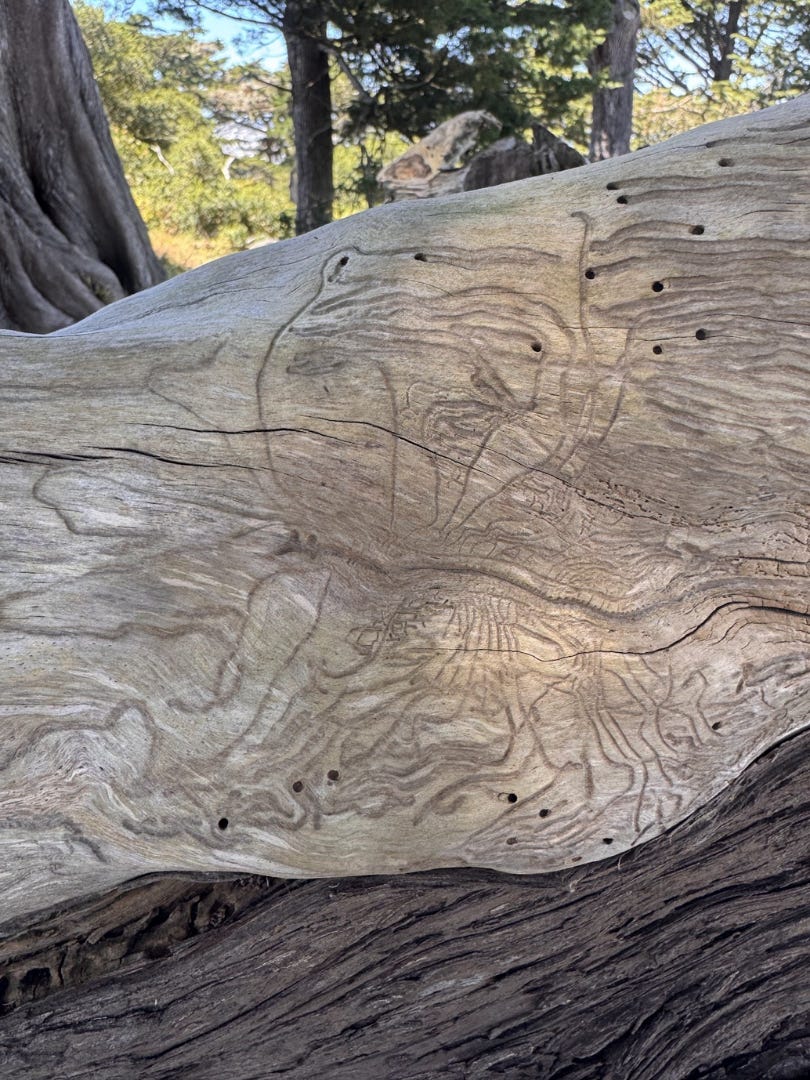
It’s no longer just dead wood. It’s a nursery for seedlings, a home for fungi, insects, amphibians, and countless microorganisms. Even in death, it continues to support life.
Now that’s poetic!
Then there’s the moss.
To most people, it’s just green on rock.
As an ecologist, I see something more.
Moss tends to thrive where water lingers, quietly mapping the microclimate of a forest floor. It tells a story of moisture, rainfall, and shade. It can even hint at which side of a tree receives less direct sunlight, favoring cooler, shadier surfaces where evaporation is lower.
Even the smallest animals can reveal something about the ecosystem. In my own research, I’ve found that ground beetles can tell us a surprising amount about forest health. Forests with greater ground beetle diversity also tend to be more productive. Tiny insects, often overlooked beneath our feet, become indicators of how well an ecosystem is functioning.
It’s the forest’s memory.
Its health report.
Its the future trajectory.
The forest is constantly communicating.
You just have to open your eyes and ears to the language it’s speaking.
Ecology has changed the way I walk through forests as well as the way I see people.
In people, we tend to notice what’s most obvious first.
The accomplishments.
The confidence.
The appearance
The outward success.
Those things are like the towering trees: impressive, visible, impossible to miss. But the parts that explain a person’s story often lie underneath.
I always ask questions like, “Did you always want to be who you are today? How did you get here?”
I want to know the quiet struggles.
The experiences no one else saw.
The people who helped them grow.
The setbacks that made them resilient.
Just as the understory shapes the future of a forest, the unseen parts of our lives often shape who we become.
Sometimes understanding a forest means looking beneath the canopy.
Sometimes understanding a person means doing the same.
I believe that sharing these parts are critical to inspring the next generation.
Perhaps that’s the greatest lesson ecology has taught me is that the most important stories are often beneath the things that first meets the eyes.